Research engineer · Scientist · Materials innovator

KUNWANG.

Pioneering energy-efficient technologies to drive a net-zero future.

Accomplished Research Engineer and Scientist specializing in next-generation renewables and low-emission technologies, dedicated to delivering scalable, energy-efficient solutions for a net-zero future.

01 / MATERIALS · ENERGY · SCALEHangzhou, China
01

Executive Summary

Elite Academic Background: Holds a research-based PhD from Peking University, recognized globally as a Top 100 World University (ranked 13th in the QS World University Rankings).

High-Level Academic Influence: Demonstrates high-level academic influence as an early-career researcher with an impressive h-index of 16, 993 Google Scholar citations, and a total of 21 peer-reviewed articles published in top-ranked journals, including Nature Communications, Advanced Materials, and Journal of the American Chemical Society.

Commercialization of Academic Breakthroughs: Proven track record of translating top-tier academic research in energy efficiency into real-world commercial applications. Highlighted by multi-million-RMB technology-development contracts, practical deployments in wind turbine de-icing and low-emission public transit, and extensive national media coverage, these foundational scientific achievements are currently driving large-scale advancements in industrial emission reduction and clean energy manufacturing.

Global Industry Leadership: Serves as a Senior Research Engineer at Huawei Technologies Co., Ltd., a Fortune Global 500 company (ranked 81st globally).

02

Academic Influence & Thought Leadership

Google Scholar citations993+Independent global reach across 30 countries01
h-index16i10-index 1902
Peer-reviewed articles21Including 7 first-authored papers03
Independent citation rate81%Organic adoption across disciplines04
Technology-development contractRMB 5.4MFrom laboratory breakthrough to industry05
Highly cited research12 / 4Top 10% papers / Top 1% papers06
Evidence & analysis↓

Top-Ranked Journal Standing

Research findings are consistently published in the world's most prestigious and highly ranked scientific journals, demonstrating significant field influence:

JournalIFGoogle Scholar category ranking
Advanced Materials29.1#1 Chemical & Material Sciences; #1 Materials Engineering; #4 Engineering & Computer Science
Advanced Functional Materials19.9#2 Materials Engineering; #4 Chemical & Material Sciences; #8 Engineering & Computer Science
Nature Communications18.1#3 Life Sciences & Earth Sciences; #3 Life Sciences & Earth Sciences (general)
ACS Nano17.3#1 Nanotechnology; #4 Materials Engineering; #9 Chemical & Material Sciences
Journal of the American Chemical Society16.6#5 Chemical & Material Sciences (general); #8 Chemical & Material Sciences
Journal of Materials Chemistry A9.2#8 Materials Engineering
Small Methods8.7
ACS Applied Materials & Interfaces7.8#10 Materials Engineering
ACS Photonics6.0#9 Optics & Photonics by Google Scholar.
Nano Research9.4#10 Nanotechnology

High-Level Citation Impact

Possesses an h-index of 16 and i10-index of 19, with 993 total Google Scholar citations and a highly robust 81% independent citation rate, reflecting widespread, organic adoption by independent scientists across 30 countries. Furthermore, 12 authored papers rank in the top 10% of most cited papers globally for their respective publication years, including 4 exceptional works that reached the elite Top 1% tier. The table below highlights the extraordinary citation rates of selected publications compared to the Clarivate Essential Science Indicators field averages:

Dr. Wang Clarivate field average
Vertical‐graphene‐reinforced titanium alloy bipolar plates in fuel cells
Dr. Wang
104
Field average
15.9
6.54×vs. field average
Surface fluorination to boost the stability of the Fe/N/C cathode in proton exchange membrane fuel cells
Dr. Wang
96
Field average
26.88
3.57×vs. field average
Electric current aligning component units during graphene fiber joule heating
Dr. Wang
94
Field average
15.9
5.91×vs. field average
Dual-emitter graphene glass fiber fabric for radiant heating
Dr. Wang
82
Field average
15.9
5.16×vs. field average
Scalable fabrication of dual‐function fabric for zero‐energy thermal environmental management through multiband, synergistic, and asymmetric optical modulations
Dr. Wang
81
Field average
12.0
6.75×vs. field average
Chemical vapor deposition method for graphene fiber materials
Dr. Wang
78
Field average
15.9
4.91×vs. field average
Graphene infrared radiation management targeting photothermal conversion for electric-energy-free crude oil collection
Dr. Wang
75
Field average
15.9
4.72×vs. field average
Multispecies-coadsorption-induced rapid preparation of graphene glass fiber fabric and applications in flexible pressure sensor
Dr. Wang
48
Field average
7.33
6.55×vs. field average
Graphene-skinned alumina fiber fabricated through metalloid-catalytic graphene CVD growth on nonmetallic substrate and its mass production
Dr. Wang
43
Field average
7.33
5.87×vs. field average
Carbon nanotubes/graphene‐skinned glass fiber fabric with 3D hierarchical electrically and thermally conductive network
Dr. Wang
40
Field average
7.33
5.46×vs. field average
Fluid-dynamics-rectified chemical vapor deposition (CVD) preparing graphene-skinned glass fiber fabric and its application in natural energy harvest
Dr. Wang
26
Field average
7.33
3.55×vs. field average
Overcoming the incompatibility between electrical conductivity and electromagnetic transmissivity: A graphene glass fiber fabric design strategy
Dr. Wang
25
Field average
7.33
3.41×vs. field average

Ratio = Dr. Wang’s citation rate divided by the Clarivate field average.

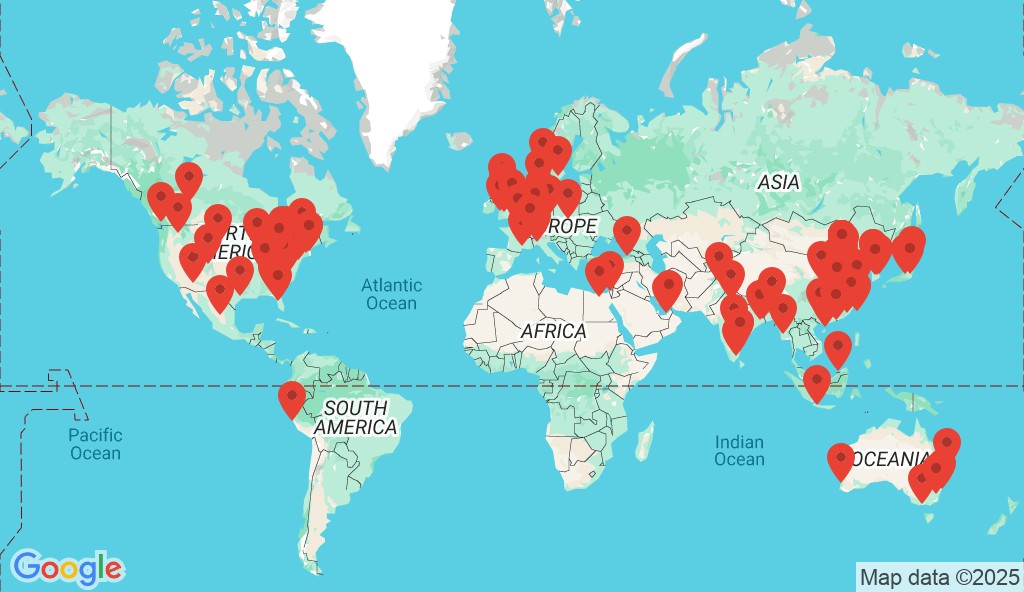
The research has been cited by scholars across 30 countries, driving technological advancements at leading global institutions.

Map showing locations of researchers who cited Dr. Wang’s work
Illustration of the international influence of Dr. Wang’s work
AfricaEgypt
AsiaMyanmar, China, Taiwan, India, Indonesia, Pakistan, Philippines, Turkey, Brunei, Hong Kong, Israel, Japan, South Korea, United Arab Emirates, Malaysia
EuropeDenmark, France, Germany, Italy, Norway, Poland, Sweden, Switzerland, United Kingdom
North AmericaMexico, Canada, United States
OceaniaAustralia
South AmericaPeru

List of countries in which Dr. Wang’s work has been cited

Independent citation rateCitations from researchers unaffiliated with the original work.

Expert Peer Reviewer

Widely recognized for exceptional expertise and major contributions to the field, evidenced by invitations to conduct at least 58 expert peer reviews for leading scientific journals. Serves as a trusted evaluator for leading high-impact SCI journals in the field of renewables and low-emission technologies, including Applied Sciences (Ranked #5 in Engineering), Sustainability (Ranked #6 in Life Sciences & Earth Sciences), Energies (Ranked #10 in Sustainable Energy), Batteries (IF = 6.3), and Antibiotics (IF = 5.5).

03

Innovations in Renewables & Low-Emission Technologies

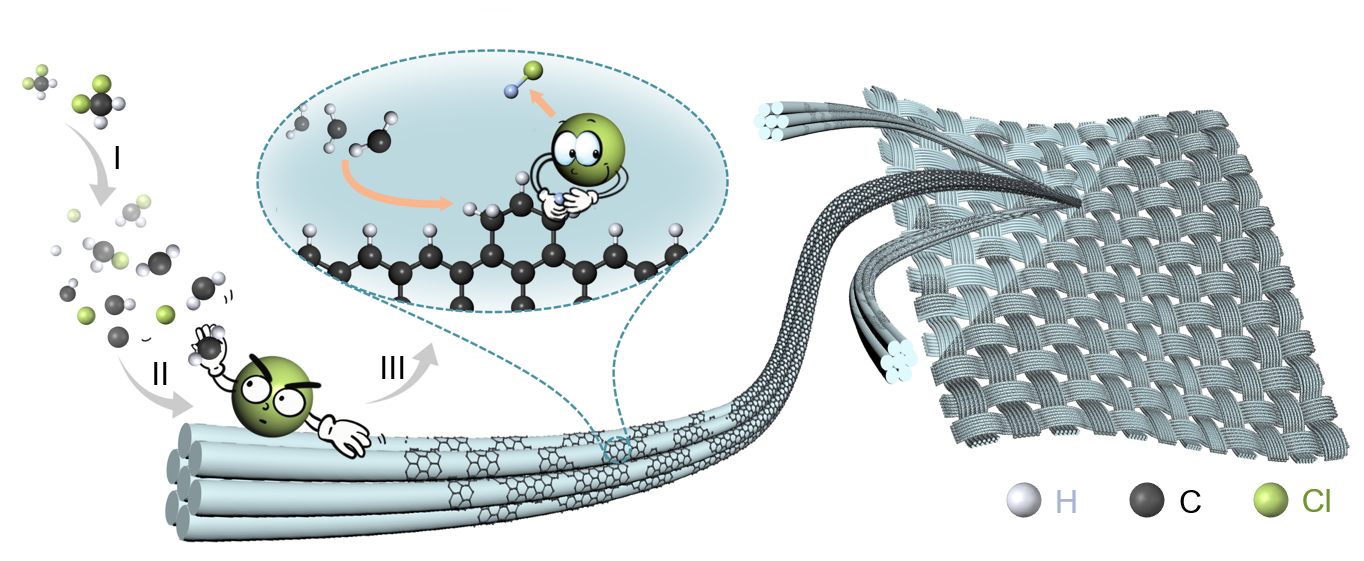
Illustration of graphene growth on fiber fabricView full figure ↗

1. Energy-Saving & Scalable Fabrication of Graphene Materials for Decarbonized Manufacturing

Dynamic Joule Heating for Low-Carbon Graphene Fiber Synthesis: Pioneered a rapid dynamic Joule-heating methodology that aligns graphene sheets and slashes high-temperature treatment time from hours to just 20 minutes, consuming only ~2,000 kJ m⁻¹ to deliver massive electrical energy savings. Published in Advanced Functional Materials (IF = 19.9, #2 in Materials Engineering) and subsequently adopted by international researchers at the University of Leeds (published in JACS, 2024) to advance flash-Joule-heating synthesis of 3D graphene aerogels.

Precursor-Enabled Rapid CVD Growth & Patented Uniformity Engineering: Developed a low-deposition-energy precursor chemical vapor deposition (CVD) route as first author in Nature Communications (IF = 18.1, #3 in Life Sciences & Earth Sciences), achieving a three-order-of-magnitude increase in graphene growth rate and an approximately 960-fold improvement in carbon utilization compared to conventional methane-based processing. Co-invented a patented gas-uniformizing mold and preparation apparatus (CN216514117U, 2022) that resolved the industry-wide bottleneck of uneven graphene growth on complex glass-fiber fabric substrates. Provided a foundational framework later utilized by independent researchers in Advanced Fiber Materials (2026).

Multi-Million-RMB Industrial Commercialization & Mass Manufacturing: Translated rapid and uniform CVD growth breakthroughs into tangible commercial returns through an RMB 5.4 million technology-development contract. Additionally, these scientific breakthroughs enabled the establishment of the world’s first meter-wide graphene glass-fiber preparation system (20,000 m2/year capacity), the industrial launch of the Jingzhou manufacturing base, and a 400,000 m² Central Plains graphene thermal-conductive film production line.
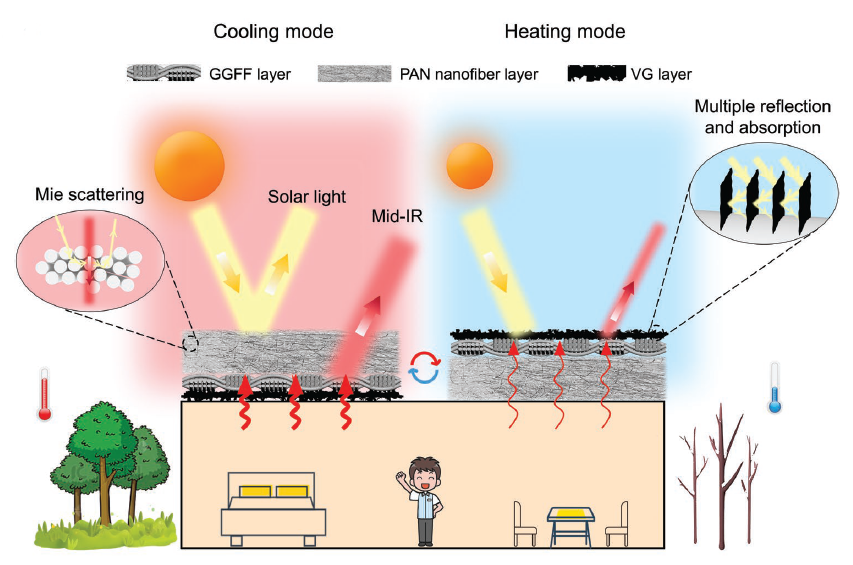
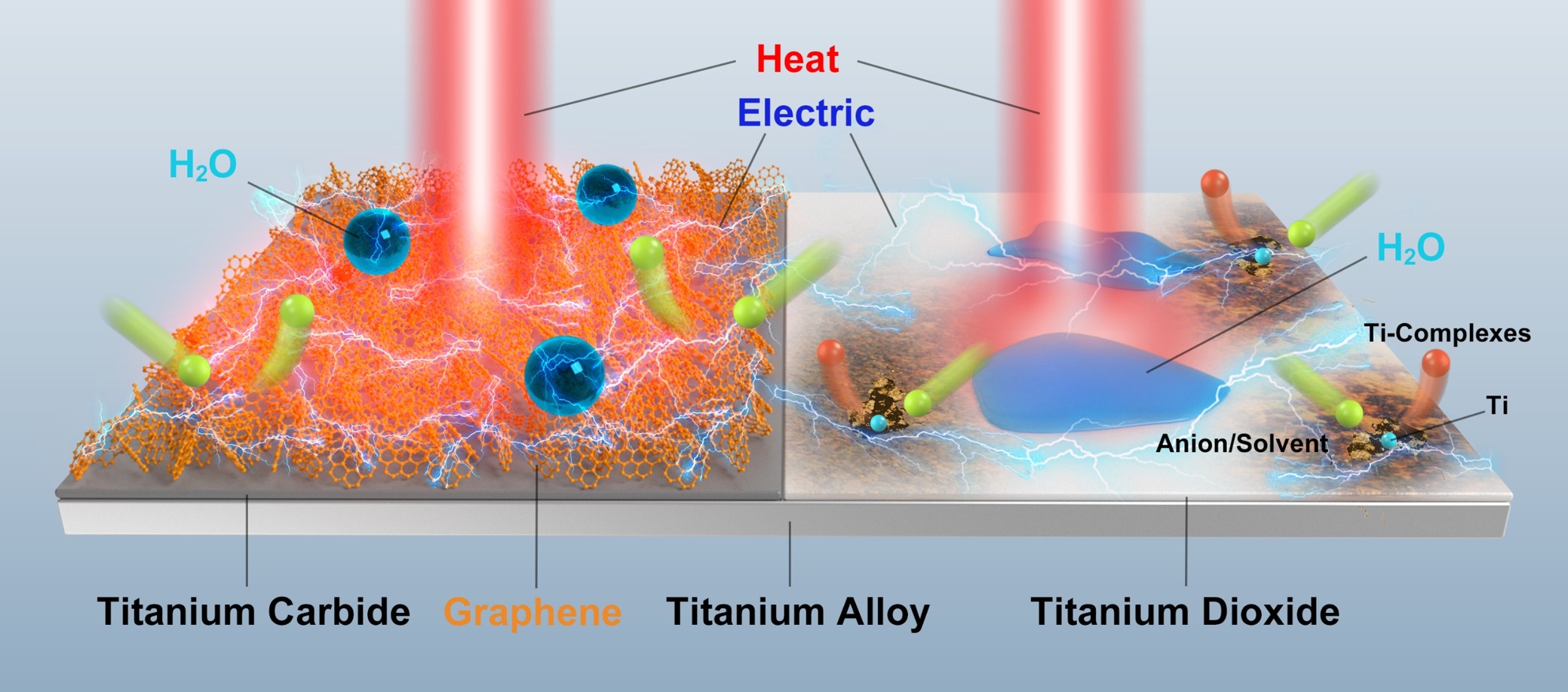
Diagram comparing cooling and heating modes of graphene fabricView full figure ↗

2. High-Efficiency & Zero-Energy Graphene Thermal Management for Clean Energy Infrastructure

High-Efficient Radiant Heating via Novel Graphene Fabric: Engineered a high-efficiency, low-emission graphene glass-fiber heating fabric with a rapid, uniform electrothermal response, reducing energy consumption by 33.3% compared to conventional alloy wires. Published in ACS Nano (IF = 17.3, #1 in Nanotechnology), the methodology has been widely adopted by international researchers, such as Ben-Gurion University of the Negev, as a critical analytical benchmark for electrothermal modeling.

Zero-Energy Year-Round Building Thermal Management: Designed a scalable, dual-function fabric uniquely integrating solar heating and passive radiative cooling to enable all-season, zero-input temperature regulation. This breakthrough demonstrated superior annual building energy savings and carbon-emission reductions compared to single-mode thermal materials. Furthermore, its net passive-radiative-cooling-power framework was directly adopted by independent researchers at the University of Shanghai for Science and Technology (Chemical Engineering Journal, 2024).

Large-Scale Deployment in Wind Turbine De-Icing & Low-Emission Public Transit: Successfully spearheaded the practical application of energy-efficient graphene heating fabrics in renewable energy and public transit infrastructure. By embedding the fabric inside wind turbine blades for uniform de-icing, this innovation eliminates traditional lightning hazards and significantly boosts wind-farm economic yield. Furthermore, its deployment in Beijing metro train seats enabled rapid heating to 40°C within 10 to 30 seconds, proving its exceptional real-world performance and reliability.

Graphene-reinforced titanium alloy bipolar plate visualizationView full figure ↗

3. Graphene-Reinforced Bipolar Plates for Clean Hydrogen PEM Fuel Cells

Breakthrough Durability & Conductivity for Renewable Energy Systems: Engineered innovative graphene-reinforced bipolar plates for Proton Exchange Membrane (PEM) fuel cells, with the foundational research published in Advanced Materials (IF = 29.1, #1 in Chemical & Material Sciences). This breakthrough slashed interfacial contact resistance by ~100-fold and reduced acidic corrosion by one to two orders of magnitude, significantly accelerating the development of highly durable PEM fuel cells for clean energy applications. Furthermore, its methodology and analytical framework have been widely adopted by international researchers (including independent teams at Taylor’s University) to drive the advancement of sustainable energy systems.

Cross-Disciplinary Platform Transfer: Proved the extensive versatility of this graphene-reinforced surface engineering platform through its direct adoption by the Peking University School and Hospital of Stomatology. The engineered materials successfully disrupted pathogen membranes and suppressed bacterial colonization in preclinical implants, showcasing the technology's high-impact utility beyond the energy sector.

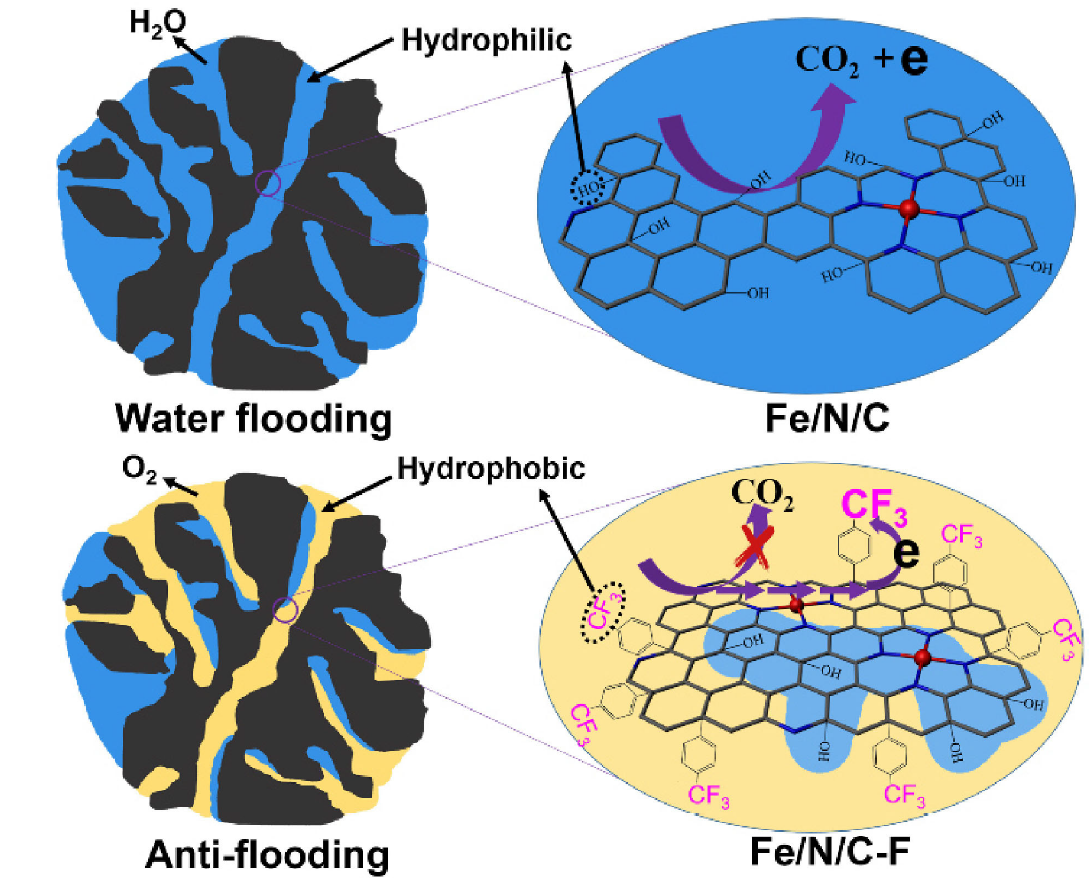
Diagram of surface-fluorinated fuel-cell catalystView full figure ↗

4. Durable Non-Precious-Metal Catalysts for Low-Cost Hydrogen Fuel Cells

Surface-Fluorination for Stable Platinum-Free Catalysts: Pioneered an innovative surface-fluorination strategy for cost-effective iron/nitrogen/carbon (Fe/N/C) catalysts, effectively mitigating water flooding and carbon corrosion in PEM fuel cells. In empirical testing, it sustained 0.56 A cm−2 at 0.5 V over 100 hours with only 15% degradation at 0.6 V, significantly advancing the commercial viability of platinum-free renewable hydrogen conversion (ChemElectroChem, IF = 5.2).

Authoritative Adoption by U.S. DOE National Laboratory Leadership: Recognized as a foundational stability mechanism by leading international fuel-cell authorities, including a Laboratory Fellow and Team Leader at the U.S. Department of Energy’s Pacific Northwest National Laboratory (PNNL), whose team relied upon and cited this surface-fluorination strategy across two Advanced Materials publications (2019, 2021) to guide next-generation non-precious-metal catalyst design.

04

Commercialization, Media Coverage & Patents

Wind turbines at sunset
01 / RENEWABLE INFRASTRUCTUREWind turbine de-icing
Researchers displaying a long sheet of graphene glass-fiber material
02 / MANUFACTURINGMeter-wide graphene glass-fiber fabrication
Illustrative public transit train scene
03 / PUBLIC TRANSITEnergy-efficient heating applications

Commercialization Milestones & Industrial Investment Achievements

Spearheaded the core technological framework that secured a prominent RMB 5.4 million industrial technology-development contract, targeting the scalable manufacturing and new application development of graphene glass-fiber fabrics.

The energy-efficient graphene heating technology was successfully deployed at scale in renewable energy infrastructure for wind turbine de-icing and in low-emission public transit for metro train seating.

Translated rapid-fabrication methodologies (Nature Communications, 2024) and the patented uniform preparation device (CN 216514117) from theoretical modeling into physical macroscale manufacturing, facilitating the scalable deployment of energy-efficient technologies.

Public Validation of Cutting-Edge Technological Advancements

Renewable Energy Infrastructure: Prominently featured in Guangming Online for the successful integration of energy-efficient graphene heating technologies directly inside wind turbine blades.

Low-Emission Public Transit: Profiled by China Enterprise News and Guangming Online for the deployment of rapid-heating graphene glass-fiber electric seats in Beijing metro trains, significantly reducing transit heating energy usage.

Industrial Scale-Up: Highlighted by China Newsweek and Guangming Online for establishing the world’s first meter-wide graphene glass fiber preparation system and launching a massive 400,000-square-meter production line.

Related coverage

Patented Innovations in Low-Emission Technologies

  • CN 216514117 (Granted May 2022): Gas uniformizing mould and graphene fiber fabric preparation device. (Crucial breakthrough that resolved industry-wide airflow bottlenecks, ensuring uniform graphene growth and enabling large-scale commercialization).
  • CN 113897591 (Granted Sept 2022): Carbon nanotube/graphene composite fiber and preparation method thereof.
  • CN 212669880 (Granted Mar 2021): Device for preparing graphene fibers.
05

Education & Professional Appointments

Huawei Technologies Co. Ltd. logo

Huawei Technologies Co. Ltd.

Senior Research Engineer · Hangzhou, China · Fortune Global 500 company

Leading research and development initiatives in next-generation technologies to drive advanced energy-efficient solutions, successfully integrated across successive generations of Huawei's products.

Peking University logo

Peking University

Ph.D, College of Chemistry and Molecular Engineering · Beijing, China · Top 100 World University

Doctoral adviser: Prof. Zhongfan Liu.

Focus: Renewables and low-emission technologies for scalable, energy-efficient solutions, based on graphene functional materials

Xiamen University logo

Xiamen University

B.S., College of Chemistry and Chemical Engineering · Xiamen, China

Honors thesis on durable non-precious-metal catalysts for low-cost hydrogen fuel cells

Awards & Honors

  • Peking University Presidential Scholarship (2019, 2022); Second Prize Scholarship (2021); Freshman Scholarship (2018)
  • Chinese National Scholarship (2015, 2016)
  • Xiamen University Outstanding Graduate Award (2018) and Merit Student Award (2016)

Independent Expert Validation

01 / 06
It is clear from the citation examples that Dr. Wang has left a remarkable impact on the field of energy-efficiency technologies. He has solved critical bottlenecks in radiant heating and passive cooling, providing standard methodologies and performance benchmarks that researchers worldwide now rely upon to support global decarbonization efforts.

Dr. Tong Wang

Distinguished Associate Research Fellow

University of Shanghai for Science and Technology · Shanghai, China

02 / 06
Dr. Wang has showcased his particular mastery of energy-efficiency technologies through a wide array of research projects that address problems in energy generation and utilization. His results testify to his exceptional skills and the quality of his education to date. Based on these results and his impressive educational credentials, I have every confidence in Dr. Wang and his ability to deliver top-tier research in energy-efficient technologies.

Dr. Yuyan Shao

Laboratory Fellow and Team Leader

Pacific Northwest National Laboratory · Washington, United States

03 / 06
The extensive citations of Dr. Wang’s research by independent experts worldwide—whether for improving corrosion resistance, enhancing electrical and thermal conductivity, or establishing reliable diagnostic benchmarks—unequivocally demonstrates its major significance. His innovations have directly solved critical bottlenecks, helping to make fuel-cell systems and advanced nanomaterial fabrication both significantly more efficient and commercially viable.

Dr. Huei Ruey Ong

Associate Professor, School of Engineering

Taylor's University · Subang Jaya, Malaysia

04 / 06
As evidenced by the widespread implementation of his research by fellow experts, Dr. Wang has unequivocally made original contributions of major significance to the field of energy-efficiency technologies. He is internationally recognized as a leading researcher whose innovations have permanently overcome critical barriers to industrial-scale graphene production by increasing graphene growth rates by approximately three orders of magnitude and substantially improving carbon utilization.

Dr. Junhua Zhao

Professor and Dean, School of Mechanical Engineering

Jiangnan University · Wuxi, China

05 / 06
Dr. Wang's research has potential for transformative impact in important commercial sectors, such as aerospace, automotive, energy, and electronics. As graphene's unique properties transform fields such as electronics, energy storage, and aerospace, Dr. Wang's method for manufacturing graphene fibers (and other advanced materials) with upgraded mechanical and electrical properties drives innovation and competitiveness in crucial industries, bolstering economic growth.

Dr. Robert Menzel

Associate Professor, School of Chemistry

University of Leeds · Leeds, United Kingdom

06 / 06
Dr. Wang is an authority in researching and designing energy-efficiency technologies. From reviewing his credentials and achievements, we found that Dr. Wang has consistently advanced the discipline. His original contributions have earned widespread recognition for solving fundamental, complex challenges in energy efficiency, including sustainability-driven engineering and cutting-edge strategies for reducing carbon footprints. His work has profoundly impacted the industry, and this history of major contributions ultimately led us to invite him to evaluate advanced research from his peers submitted to our journal.

Dr. Adrian Ilinca

Editor-in-Chief of Energies; Professor, Mechanical Engineering Department

Université du Québec

Additional independent advisory opinion
Dr. Christopher J. Arnusch, Associate Professor, Department of Desalination and Water Treatment, Ben-Gurion University of the Negev, Beersheba, Israel.

06

Peer-Reviewed Publications

(A total of 21 top-tier peer-reviewed articles, including 7 as first author; # denotes first or co-first authorship)

First-Authored Papers

  1. Kun Wang, Jiamin Zhu, Shuo Wang, et al. Suppression of the Leidenfrost phenomenon by a superhydrophilic graphene nanobush. ACS Applied Materials & Interfaces 2025, 17, 43371–43377.

    DOI 10.1021/acsami.4c22933
  2. Kun Wang#, Xiucai Sun#, Shuting Cheng#, et al. Multispecies-Coadsorption-Induced Rapid Preparation of Graphene Glass Fiber Fabric and Applications in Flexible Pressure Sensor. Nature Communications 2024, 15, 5040.

    DOI 10.1038/s41467-024-48958-y
  3. Shuting Cheng#, Kun Wang#, Shichen Xu#, et al. Co-enhancement of thermal conduction and radiation through morphologies controlling of graphene functional layer for chip thermal management. Nano Research 2024, 17, 8885–8892.

    DOI 10.1007/s12274-024-6540-6
  4. Kun Wang#, Shuting Cheng#, Jiawei Yang#, et al. Bush-Shaped Vertical Graphene/Nichrome Wire for Blackbody-Like Radiative Heating. Advanced Functional Materials 2022, 32, 2208785.

    DOI 10.1002/adfm.202208785
  5. Feng Yu#, Kun Wang#, Lingzhi Cui#, et al. Vertical Graphene-Reinforced Titanium Alloy Bipolar Plates in Fuel Cells. Advanced Materials 2022, 34, 2110565.

    DOI 10.1002/adma.202110565
  6. Shuting Cheng#, Mian Chen#, Kun Wang#, et al. Multifunctional Glass Fibre Filter Modified with Vertical Graphene for One-Step Dynamic Water Filtration and Disinfection. Journal of Materials Chemistry A 2022, 10, 12125–12131.

    DOI 10.1039/D2TA01086K
  7. Kun Wang#, Shuting Cheng#, Qingmei Hu#, et al. Vertical Graphene-Coated Cu Wire for Enhanced Tolerance to High Current Density in Power Transmission. Nano Research 2022, 15, 9727–9733.

    DOI 10.1007/s12274-021-3953-3

Contributing-Authored Papers

  1. Yuyao Yang, ..., Kun Wang, et al. Fluid-Dynamics-Rectified Chemical Vapor Deposition (CVD) Preparing Graphene-Skinned Glass Fiber Fabric and Its Application in Natural Energy Harvest. Journal of the American Chemical Society 2024, 146, 25035–25046.

    DOI 10.1021/jacs.4c07609
  2. Mengxiong Liu, ..., Kun Wang, et al. Carbon Nanotubes/Graphene-Skinned Glass Fiber Fabric with 3D Hierarchical Electrically and Thermally Conductive Network. Advanced Functional Materials 2024, 2409379.

    DOI 10.1002/adfm.202409379
  3. Wenjuan Li, ..., Kun Wang, et al. Graphene-skinned alumina fiber fabricated through metalloid-catalytic graphene CVD growth on nonmetallic substrate and its mass production. Nature Communications 2024, 15, 6825.

    DOI 10.1038/s41467-024-51118-x
  4. Kewen Huang, ..., Kun Wang, et al. Overcoming the Incompatibility between Electrical Conductivity and Electromagnetic Transmissivity: A Graphene Glass Fiber Fabric Design Strategy. Advanced Materials 2024, 36, 2313752.

    DOI 10.1002/adma.202313752
  5. Hao Yuan, ..., Kun Wang, et al. Scalable Fabrication of Dual-Function Fabric for Zero-Energy Thermal Environmental Management through Multiband, Synergistic, and Asymmetric Optical Modulations. Advanced Materials 2023, 35, 2209897.

    DOI 10.1002/adma.202209897
  6. Yi Cheng, ..., Kun Wang, et al. Graphene Infrared Radiation Management Targeting Photothermal Conversion for Electric-Energy-Free Crude Oil Collection. Journal of the American Chemical Society 2022, 144, 34, 15562–15568.

    DOI 10.1021/jacs.2c04454
  7. Jiang Jun#, ..., Kun Wang, et al. Flexible Full-surface Conformal Encapsulation for Each Fiber in Graphene Glass Fiber Fabric against Thermal Oxidation. ACS Applied Materials & Interfaces 2022, 14, 19889–19896.

    DOI 10.1021/acsami.2c02979
  8. Hao Yuan, ..., Kun Wang, et al. Dual-Emitter Graphene Glass Fiber Fabric for Radiant Heating. ACS Nano 2022, 16, 2577–2584.

    DOI 10.1021/acsnano.1c09269
  9. Ruojuan Liu#, ..., Kun Wang, et al. Complementary Chemical Vapor Deposition Fabrication for Large-Area Uniform Graphene Glass Fiber Fabric. Small Methods 2022, 6, 2200499.

    DOI 10.1002/smtd.202200499
  10. Yi Cheng#, ..., Kun Wang, et al. Controllable Growth of Graphene Photonic Crystal Fibers with Tunable Optical Nonlinearity. ACS Photonics 2022, 9, 961–968.

    DOI 10.1021/acsphotonics.1c01823
  11. Yi Cheng#, ..., Kun Wang, et al. Electric Current Aligning Component Units during Graphene Fiber Joule Heating. Advanced Functional Materials 2022, 32, 210349.

    DOI 10.1002/adfm.202103493
  12. Xuejuan Meng, ..., Kun Wang, et al. Enhanced Hemocompatibility of a Direct Chemical Vapor Deposition-Derived Graphene Film. ACS Applied Materials & Interfaces 2021, 13, 4835–4843.

    DOI 10.1021/acsami.0c19790
  13. Yi Cheng, Kun Wang, Yue Qi, et al. Chemical Vapor Deposition Method for Graphene Fiber Materials. Acta Physico-Chimica Sinica 2022, 38, 2006046.

    DOI 10.3866/PKU.WHXB202006046
  14. Yucheng Wang, ..., Kun Wang, et al. Surface Fluorination to Boost the Stability of the Fe/N/C Cathode in Proton Exchange Membrane Fuel Cells. ChemElectroChem 2018, 5, 1914.

    DOI 10.1002/celc.201700939